Showing posts with label Legacy DnD. Show all posts

Tuesday, February 9, 2016

Class Archetypes and the Sub-Games

Very quickly- I have mentioned last week that D&D is divided into a number of sub-games. And thinking further I would wager that the most famous and effective classes are those that dominate one of these sub-games.

Obviously the Fighting-ManPerson or some variation of it dominates the combat sub-game. Magic-User (or variation thereof dominates the Magic sub-game. The Thief and variations dominate the dungeon exploration sub-game. The ranger would be the logical next for the wilderness exploration sub-game with a possibility of the Druid.

Though there are sub-games for air or sea travel and combat these seem to be rare edge cases that would be filled by very specialized Ranger or Fighter offshoots that few would play unless the campaign centered on it. The Cleric is binary here- depending on edition and build the Cleric is a master or all or none with a default to magical healing. Which highlights the problems of the class in my opinion. But also stands him up as a counterpoint to the Magic-User and the Fighter.

It seems that this would lead t the idea that what classes you have in your game are dependent on if you want an adventuring archetype to dominate a particular sub-game, or do you want that shared? Classes that share archetypes would be interesting. Again a Ranger with a more limited combat ability compared to the Fighter seems like it would be the poster boy for this approach. Also there is the idea of building out the base archetypes to share in the sub-games the other classes dominate.

It seems the Thief was an interesting design accident that could be used as an example for the future game development. What seems to have happened in a subconscious collective sort of way was that players understood that there was a sub-game of dungeon exploration that The Cleric, Fighter, and Magic-User while dominating their own parts of the game were not masters of. Ergo the Thief develops. It seems it would come back to essential spotlight time. Is it shared or not?

Sunday, February 7, 2016

Discrete Worlds II or The Tipping 'Scales' of the Game

Ladies and Gentlemen: The Tessellated Point Crawl...
When you look at the primordial history of the game Dungeons & Dragons you see that there is a clear trend to build on it with games that already exist. The obvious example here is "Outdoor Survival" as the rules for overland travel. But when you look at it there were many more - "Braunstein" and "Chainmail," "Don't Give Up the Ship," just to name a few. This makes sense when you think about it - if you need a system to model something, it is more expedient to find one that models that something than spend time crunching the numbers and building a system from whole cloth. And so what you get as time and printing runs distill the systems is really a game of games.

When you study the Hebrew/Christian scriptures in Comparative Religions 101 you quickly discover what the western world calls "The Bible" is really not a book, but rather a library of separate books just printed in one volume. It contains poetry, history, law, letters of instruction, letters of prophecy, history of law, etc. It is a book of books. And I use this to belabor the point above - When you ask someone to read "The Bible" you are really asking them to read many different books. And when you ask someone to play D&D, you are asking them to really play many different games.

While using multiple games tears down barriers in design it may build up barriers to entry. As the modern game stands in the "OSR" or in the "managed properties" you often have a "game" for creating characters, a separate "game" for exploring dungeons, a "game" for wilderness travel -which may include other "games," and a "game" for combat. What I am doing here is taking the "_______ system" of any role playing game and identifying it as a separate "game." Because really it is. The d20 grappling process is a prime example. And each "game" is complicated by the fact that some things in one "game" have to seamlessly work with the other "games" if they affect things in the other "games."

Where do we go from here? Let's talk about scale next. Each "game" operates on some sense of space/time scale which defines its granularity. In modern "managed properties" the space/time scale for combat is 5ft/6s. The OSR seems to hang around the 10ft/10sec paradigm. Combat is easy to keep discrete. Travel on the other hand, to name an example, quickly stops being discrete in some sort of geometric progression related to how far you travel. That's because you might not take the same route back and more "Cartesian" space needs definition the further you go afield.

Multiple games indicate the possibility of multiple scales which introduces complexity as the abilities of the characters have to be able to operate at all scales. A lot of this complexity is part of the assumption of RPGs and because it exists as the way things have always been done, it does not get noticed as a stumbling block to play and entry into the game.

Some might not see this as a problem. Which is fine - the Game - big 'G' - gets along in this way pretty well, and I don't want to discount that. And the first reaction I have is to try to see if there is a way to set up a resolution framework that is "retargetable." That is a framework that can be applied to anything to provide for procedural or dramatic resolution. And what this would do is reduce the number of games you need to learn to one which can be applied to different tasks and time scales and moving around point crawls. At first it sounds like a good idea.

The genesis for this comes from two places- first there was a post from 2010 on a stack exchange board that made the suggestion of 3 round combats using intent for each side and resolving those intents. Each round the sides that were successful in their intents scored points and the ultimate resolution was in favor of the side that scored the most over the three rounds. Then there was part 3, 4 and 5 of Justin Alexander's The Art of Rulings found here, here, and here. and this bit by The Angry DM.

All combined it gave me the idea of a "number of rounds" framework that would allow you to resolve any action with scale and time being applied as needed, but only requiring the players to use one set of steps to resolve their intents. This would be another step, along with the point crawl on making the world more discrete.

The issue with something like this is that it can threaten to make the game bland. You keep moving through the same seven steps, no matter what. Essentially you are taking a suggestion about the procedure for combat and mapping it to the rest of the game. This leads to issues. And its really not what Justin Alexander was talking about in the first place- no matter what madness I am inspired to when I read his posts. He is talking about presentation and response when a game has a particular arbitrator "resolution conventions which GMs habitually fall into."

The real solution is actually hiding in the set design and point crawls mentioned earlier.

Thursday, February 28, 2013

Clerical Issues

Real quick: JB over at B/X Blackrazor has been talking a bit about clerics. Mainly its about how they really don't work given the source material that D&D draws on, and how the game might work better if they were removed. Delta figured this out way back in 2008. And his reasoning was my main inspiration for banning the cleric in my own OD&D house rules.

Its odd that we both were thinking about cleric banning at the same time. I was revisiting my decision to answer the question of "what 5 things would you change in D&D if you could only change 5?" I have said before that we live close enough to each other that we are drinking the same water.

The really interesting thing here is that JB is coming very close to the same line of conclusions as Delta but I am pretty sure he is completely unaware of Delta's work and reasoning. Maybe not. But including this blogger, that makes three guys in the OSR that have outright removed clerics from the game. Which makes me think we are on to something here. Both these guys make the points for me so I won't put them up here. Check out the posts linked above and draw your own conclusion. For me, I think the Thief has more right to be in the game than the Cleric. So I think we should kill the cleric. And take his stuff. Delta chose to just nix the cleric spells all together. I chose to give them to the magic-user since he was now going to be pulling insane priest duty for the foreseeable future.

What I realized reading JB and rereading Delta was that my solution for what to do with turning made sense but was inelegant. I gave everyone the ability to turn. It made sense, if you thought about it. Turning is based on vampire lore and more specifically Van Helsing's use of a cross in Dracula. Note however that Van Helsing is not a priest. He is not ordained. He has a sum total of 0 supernatural power. So in my book that means that everyone can turn. The mistake I made was that I gave everyone access to the chart. What a mess.

First off the turning mechanic is really clunky and a little fiddly to apply. This obviously varies with edition, but you catch my drift. Secondly applying it to everyone made it even more clunky in that you had to figure out how to determine at what power level the characters turned undead. Work. Work. Work.

Here it is: If you must be rid of that meddlesome priest, make vampires superstitious.
Holy symbols of any faith keep Vampires (and only Vampires) at bay. Anyone can hold up (or wear while facing) any symbol of a god and the vampire won't touch them. However the symbols are directional. So while Count Dracula in front of you is held at bay his minion vampire behind you is not.
This way you get the ability exhibited in the source material but you don't have to worry about clunky mechanics. What about the other undead? There is no pre-D&D precedent of priests holding other undead at bay, and undead are meant to be feared. Turning is really powerful and thus it is like healing: it is something a party can't go without if it is available in the game. Take out turning and the fear of undead returns.

Wednesday, January 30, 2013

Mountains and Mole-Hills

I am going to try to get this one out really fast. Limited time here. Rob over at Bat in the Attic posted some long distance sighting rules. They are a great set of rules. The real genius behind them is the kind of linear rock paper scissors thing he has going on with the mountains, hills and plains with an assumed height for generic mountains and hills.

I wanted to offer a correction. The heights and distances presented are off by an order of magnitude for the mountains and in my opinion a little short for hills. If you go on the idea that the average height of a notable mountain peak is around 10,000ft (great peaks like Mt Ranier, and others land between 10k and 20k with legendary peaks like Everest and Denali topping out in the upper 20k's), and the United States and England both draw the "official" this is now a mountain line at 990ft and 2000ft respectively you see what I mean. You can see mountains from quite a distance on a clear day - getting into the 100's of miles.

So lets turn this into game stuff:
I have been thinking about mountains a bit in my game design efforts when it comes to travel and sighting. So this info is stored in my trivia banks an easily ready.  Humans start to experience altitude sickness at about 8000ft. Tree-line fluctuates around this depending on latitude an atmospheric conditions generally we could say that 7500ft is a good round ball park number. So I would assume that given navigating mountainous terrain is essentially a matter of finding your way through spurs, around mountains, along rivers and over saddles (the low arts between peaks) casual travelers will be at about 5000ft if they are in a mountain hex. 
Hills are a crazy beast. No one really knows when a hill starts being a mountain. There are all sorts of ways that use height to slope and distance around base. I like hills ending at 1000ft for game purposes. It allows us to say that most mountains are an order of magnitude higher than most hills. Just like when traveling through mountains, in hills you aim for the low areas rather than follow the ridge lines and go from peak to peak. So we can ballpark the height for casual travelers in hills at about 500ft. If you decide that hills go to 2000ft then you will obviously use 1000ft as the casual height.
I work on the 6mi per hex scale. So the hexes here are going to reflect that in my calculations.
Rob's note of about an hour to find a good sighting place is pretty accurate with my own hiking experience in hill like areas, but I would stretch this to 2 hours in mountains. On open area I would reduce it to 30 minutes and for swamps I would say you can only ever see into the next hex. If they want to strike out to tree line throw in an additional hour.  Breaking tree line is handy and generally offers wide unobstructed views. The same is true for peaks and I would say that gaining a summit allows you to see over the next 2 mountain hexes in mountains or hills.
Another point of note: Broken or overcast clouds are totally going to ruin your view from a mountain, but generally not hills.
If the mission of the party is to map large amounts of area they very well might want to climb the highest mountain. At this point they are climbing a specific mountain and are out of the scope and intent of this rules exercise.
Time Needed: Mountains: 2 hours (3 hours for tree line; 4 hours for peak)
Hills: 1 hour (2 hours for peak)
All other: 30 Minutes
Distance Sighted Over Lower Terrains: (counting for refraction: d~= 1.32 * Sqrt(h) where d is in miles and h in ft.)
Random Peak (10000ft): 22 hexes
Tree Line (often 7500ft): 19 hexes (may be high enough for altitude sickness, referees call)
Mountains (5000ft): 15 hexes
Hilltop(2000ft): 10 hexes
Hills/Hilltop(1000ft): 7 hexes
Hills(500ft): 5 hexes
Distance Sighted to Equal or Higher Terrain:
Mountains to Mountains: 1 hex
Mountain Peak to Mountains: 2 hexes
Hills to Mountains: 1 hex
Hills to Hills: 1 hex
Hilltop to Hills: 2 hexes

Notes:
Broken or overcast clouds block mountain views to 1 hex, and may do the same for hill views.
The distance sighted over lower terrains is also the maximum distance that such a particular elevation can be seen. So a mountain can be seen fairly certainly 15 hexes away- but the foothills 10 hexes away won't be discerable (or only just so)  but any foot hills 5 hexes away would be visible but would block the view of those between 5 hexes and 15 hexes away.

Sunday, January 27, 2013

A Book of Wands

http://www.dvdizzy.com/images/sword3.jpg
Recently there has been some talk about wands.
Timrod over at Unfrozen Caveman Die-Chucker fired the first salvo sometime going into the holiday season with Degrading Wands. Its a good idea that follows one of my game simplification axioms (reduce book keeping) to go against one of my others (reduce die rolling). The comments are good as Brendan and 1d30 offer up some cool alternatives that work if you are alright with adding more rolls to your game.

Speaking of Brendan the keeper of Untimately- He entered the mix with his post entitled Basic Wands just a bit ago. His post is full of pretty cool ideas. Initially I didn't think I would go with the elemental thing- then he cites a darn good post by Delta, but the target rolls a save to avoid 1d6 damage is complete gold. It gives MU's some kick in a fight. Somewhere the complexity gets out of hand but that's okay as you can pick and choose what you like here.

Next up was the first "unification post" by C over at Hack & Slash. Lots of good ideas there. Some decent stuff in the comments. The fact that he missed Timrod's post is pretty much the reason this post exists.

Now class, turn in your copy of Playing at the World to pages 198 and 199 for a description of the source material for wands and staffs from sources in Appendix N. The most interesting thing here is how Sword and Sorcery literature in specific and Fantasy literature in general does not really distinguish between a wand and a staff. They are simply sticks; with sticks being a requirement for working any magic.

This is something I would use as part of the argument that magic items should not be classed by form, but rather by function (a.k.a. the hat/cloak of invisibility problem from 3e). That is a history and argument for another time. 

Since ideas are free here are some more ideas about wands from our labs here in the steam tunnels:
  • Wands permit a MU to cast the last spell cast using the wand indefinitely.
  • Wands permit the magic user to cast any spell memorized without burning a slot.
  • Wands associated with a spell (like a wand of fireballs) can be used by any magic user that has learned that spell, and the magic user does not have to have memorized the spell.

Sunday, February 12, 2012

Here's What Happened - Part 1: New Ways to Play

D&D is pretty hard to classify. Even experts on D&D can often disagree on exactly what it is. This makes it something that is very difficult to study. As James at Grognardia and the so called OSR at large has demonstrated much of the study of the game comes through examination of rules changes and additions through its history, with very little examination of actual play. Observing actual play of D&D is a lot like studying sub-atomic particles- it takes a lot of resources to find a game that can be observed and when observed you may not see what you are looking for or not know what sort of environment you will find when you do observe. And does observing the game change it? Possibly.

So a while ago James asked “What Happened?” The question he is asking here is: Why did D&D go from a game sold in the mainstream to a game that was not? In 1983 D&D was available in grocery store toy/game aisles, department stores, and books stores. By 1985 it was pretty much only available in book stores or specialty shops (comic/game stores). I posted in the comments for the post at Grognardia that there is not a single factor that was a “smoking gun” but rather several things working in concert. In addition all these things and how they combined were obscured by the "satanic panic" of the time. The panic obscured what was going on not because it killed the sales but because of the opposite: it blew them through the roof. This record level of sales due to hype obscured the impact that business and design decisions had on game sales. The degree of the success of the game based on its own marketing and its own quality was forever obscured. Even after the smoke cleared, it was impossible to say why after the panic sales were trending downward when before they had been on a healthy trend upwards.

We can’t know for certain what happened. However there are some places we can look that might allow us to figure out why D&D came out in a decline on the other side of the panic. There are two industries that happened concurrently with the development of RPGs, and it can be surmised that all three are something that occurs as a society computerizes. Both of these other industries share two key socio-economic traits with RPGs. One is that both were connected with a social fad and another is that both had steady economic growth to a peak and then a long decline after a fad phase. The first is interactive fiction which is almost as old as D&D itself and walks hand in hand with D&D and RPGs in general and always has. It breaks into two branches- the text and the electronic. The other was “arcade video games” which were not as influenced by content and concept but do share a similar fad and economic pattern.

Interactive fiction started with computers. “The Colossal Cave Adventure” was developed in tandem with the march of computerization and the appearance of D&D. It was expanded upon and also called “Adventure.” It was followed by “Dungeon” an early version of “Zork.” These games emulated the exploratory sandbox and puzzle aspects found in D&D. “Colossal Cave Adventure” was developed between 1975 and 1976 and improved upon in 1977 and had many variants. “Zork” was developed between 1977 and 1979, with the “Dungeon” variant appearing in 1977. While the text based variation on interactive fiction known as “Choose Your Own Adventure” did have its start as an idea around 1970, it did not find a publisher until 1975, and did not break into the critical success it had until 1979. All of these things are happening at the same time that D&D and RPGs are ascendant but before the advent of the panic.

The arcade video game industry developed largely independent of D&D. In all its faddishness it shares two traits with electronic interactive fiction and “Choose Your Own Adventure.” Additionally these two traits are shared by Dungeons and Dragons. These two traits I believe are the key to why all of these pastimes experienced a slow decline and their connection to Dungeons and Dragons will become readily apparent as we examine what happened to interactive fiction.

Friday, January 20, 2012

The 1e Re-release is a Census

News that the 5th edition is in the pipe has arrived. On its heels is the news that Wizards of the Coast is releasing 1e with original interior art and new covers in a special direct to game store printing with a charitable donation to the EGG memorial fund for each copy bought.

There can be no doubt that this is absolutely directed at the OSR. Here are the reasons why:

1. There is a huge connection between the OSR and the GGMF. A quick surf around the OSR blogs will show that the GGMF is the generally the favored charity of the OSR. This can be seen in the 2011 GenCon announcement for the GGMF:
The Gygax Memorial Fund will be hanging out at the Old School Renaissance Group, booth 1541 in the exhibit hall. Gail Gygax, Gary's widow, will be there, and she will also be presenting the 2011 ENnie Awards on Friday night.

2. The sale of these things is being listed as a hobby channel exclusive.
Given this I am led to think they are tracking these sales with care. Number sold will not be simply the number sold into distribution, but the number sold to each game store.

3. Given that there is a donation attached to the sale it behooves Wizards to track sales more carefully.

4. The audience are people who would buy a 1e book. This indicates that it is someone who probably is not into the latest iteration of the game or at least would enjoy an older version of it.

5. The audience are people that actually keep up with what Wizards does, but still don't keep up with the current iteration of the game or at least enjoy an older version of it.

6. The audience is made up of people who want to patronize games stores.

I would wager this fits 90% of the OSR population.

For a long time we have had the ear of The Mearls, and at least the attention of Monte Cook. However we have not had the attention of sales and marketing. I think that this is an attempt to measure the probable size of the OSR. Its a census. The designers and developers will respect us because (generally) the OSR is kinda fun. But sales and marketing are only going to respect hard numbers that without a doubt translate to sales. The nature of this release is one that can be written off as a charity if it turns out that we are 1000 dudes with really loud keyboards. But if sales indicate that this segment is in the 10s of thousands, Wizards is going to rethink some things, I guarantee it.

I think we might be a whole lot bigger than we think we are, both in voice and in number.

Saturday, August 6, 2011

My Love for You is Like a Truck! Berserker!

What is not fun about berzerkers? Jeff over at Jeff's Gameblog describes them as psycho-killers:
“Psychokillers” is my term for stock berserkers, by the way. When encountered in dungeons I tend to describe them as axe-wielding maniacs from slasher flicks, rather than as Vikings. “You open the door and waiting for you on the other side are two Jason Voorhees and three Leatherfaces. They attack.”
And I agree. I think the guys in the monster listing probably should be just "psycho-killers", but what about characters with a legitimate battle rage?

In the past numerous classes are have been written to allow player characters some kind of battle rage ability. White Dwarf and The Dragon both had Berserker classes back in the day; and the rage ability also appeared with various Barbarian class builds.

This house rule is based on the LBB and B/X monster entry for a Berserker. I figure that a +1 to hit points indicates that they have a Constitution bonus. The +2 to attack is clearly from the rage. And uncontrollable rage is not a trait of the the lawful, so... here's the rule:

If Chaotic or Neutral, Fighters with a Con bonus can be berserkers. They get +2 to attacks but loose the ability to separate friend from foe. The berserk character will attack the nearest entity that might pose a threat to anything. If they are attacking a friend or ally the berzerker's player rolls 1d20. If the roll is higher than the friendly target's Charisma they don't separate friend from foe and the friend is attacked. A Berserker can go berserk a number of times per day equal to their Constitution bonus.

The 880ft Hexagon Bowshot

So I have been gone again for a while, busy with other more pressing issues- like work. Anyhow, I should appear again on a more regular basis now, but I wouldn't take my word for it. I wanted to post a little more about wilderness hexagons, mainly about being in bow-shot. My next hexagon related post will be a bit about mapping on 1 mile hexes using the old traditional hex symbols.

Anyhow, I wanted to make sure readers understood about being in bow-shot in my previous hexagon post. Dan Collins (aka Delta) over at Delta's D&D Hotspot has through his research become the undisputed master of D&D ballistic knowledge. He has numerous articles about D&D ballistics. Go see for yourself. However some of the best are the ones where he crunches the numbers and determines what the penalties and ranges really should be based on how things really work: here, here, and especially here. (Yes we both know its a game, yes we should relax, but stuff like this relaxes us. And what the heck, its fun!)

If you read the first one you find that the best of the best archers are only hitting a stationary, unarmored man sized target at 220 yards @ 16% of the time. Something at the edge of the hex might be a believable shot. So if you are a high level character and the target is unarmored and eating lunch on a rock, you might have a chance. Conversely, hitting an army in the next hex is 100%.

Monday, March 21, 2011

Whadaya Mean I Can't Scribe a Scroll?

Magical writings. This is one of the great under served topics in old school role playing games. Jeff has been thinking about how players know what spells they start with and what that "min" on the table really means. ChicagoWiz looks at the other end of the gun with a quest to find the time and gp costs of copying a spell. Strangely I have been thinking about spell learning and scribing also. The way I interpret Jeff's table is the following:
1. You work through the level 1 spell list until you run out of spells or the number of spells known is equal to the max number.
2. If you have not hit your max but you are over your min, you are done.
3. If you have not hit your max and are still under your min, roll again for the spells you did not get last time until you are over the min. Repeat until you are over the min. Now you are done.

After tha
t, when you get a new spell you roll to see if you understand it. When you level all the spells you have that you don't understand you can check again for. While a caster cannot understand a spell they can still discern the complexity of the spell (i.e. the level). Additionally a caster can take a week per spell level of uninterrupted study in an attempt to understand a spell. At the end of the time the player rolls to see if the caster learned the spell. A caster can try again as often as they like. Remember there are 52 weeks in a year.
Swords and Wizardry Complete adds a spell level cap to the Intelligence score. The reason I was looking into the understanding thing was because you need to understand the spell to put it in your spell book.

Now, the big question I have for AD&D is: Why can I copy spells into my spell book, and if I so choose cast those spells out of my spell book as if they were scrolls (where they disappear off the page) but cannot create a scroll itself? If you can copy a spell from a scroll into a spell book, why not be able to copy a spell from a spell book to a scroll? Why wait for 7th (or 11th) level? Holmes makes the most sense here. If you can understand a 1st level spell, and have it in your book then you can copy it to a scroll. ChicagoWiz makes the point that Holmes does not mention the cost of copying a spell into a spell book. I think the cost unilaterally (OD&D, AD&D, Holmes, B/X, 3e etc.) is that you no longer have a scroll. But I figure that copying is copying and costs the same in all directions.

The time to create is pretty much a DMs call depending on how much he thinks the characters should be scribing. Holmes' week per level of the spell is probably based on the time that it took for a medieval monk to write a page of an illuminated manuscript working 6 hours a day for a week. But if you want the game to be run on the pursuit of treasure so you can pursue more treasure then you need things that the characters can spend their money on (like carousing). Scrolls become empty when they are used. That's a good hole in the pocket if I ever saw one. So I am tempted to say that it should be a day per level rather than a week. You still get PCs wasting a lot of time and also get them wasting money too.

Though what I might be inclined to do is this: if you want to scribe a scroll you need to gather the materials and set up a work space. This takes a week for whatever spell. Once you have set up shop you can pop them out at the day/level rate. But if you want to change spells, you have to "retool" your workspace and that takes a week. But then you hit the math-you-thought-was-small wall.

Here is my house rule on magical writing basics:
Spells can be stored in one of two ways: spell books are a kind of "permanent spell library" and a scroll is a kind of "temporary spell library." You can make copies from a permanent spell library without loss. Copying from a temporary library causes the loss of the library. Casting from both causes loss on both. Spell libraries can come in all different forms but involve writing and the above stated loss on casting or transferring.

To transfer a spell between libraries it cost 100gp/level of the spell. The time it takes is either 1day/level of the spell or 1week/level of the spell at the DMs discretion.

Research costs 1000gp/spell level and takes 1month/level to complete.

If a permanent spell library is destroyed memorized spells can be replaced in a day. Unmemorized but known spells are replaced as per the transfer rules or research rules as per the DM's discretion.
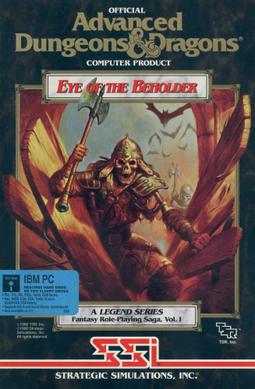
*Images from "ah-art" and "bloodmoonequinox" from deviant art respectively


Friday, March 18, 2011

I'll Swallow Your Soul!

Charisma has a lot to offer. While it often comes up as a person's charm or personality I think it should be more than the limitation on the meat-shield purchase plan. Charisma can also work well as a measure of your soul. Think about really charismatic musicians- they share a part of themselves in their art. Performers and speakers often are said to tap into their soul to convey their pain or idea. What is it that so inspires people to follow a particular leader? Why not have charisma measure how big that soul is? Getting more resistance against level draining monsters certainly will kick it out of the dump stat category.
Charisma indicates the maximum level for a character in any class. Monster powers that drain levels no longer drain levels- they drain Charisma. Charisma is now also a measure of your soul. When you run out of Charisma you die. Ignore Charisma damage when dealing with hirelings, followers and henchmen.
Addendum: I have just looked at the monsters that do level drain. Seems in LL and S&W level drain is the standard undead big bad power. Vampires drink blood and I would tie blood to Constitution rather than levels. Perhaps they also have a level drain? I would be hesitant to give them both. I am fond of stat damage as a measure of capacity for damage, but not a fan of recalculating things as the stats drop, hence the last line of the above rule. I should probably make my next post a treatise on how stat damage can be your friend.

Addendum addendum: Thinking about it I would remove the vampire's level drain and replace it with the ability to drain blood on an incapacitated or charmed or willing target, and say they can drain their attack damage points of Con per turn. This fits with the Dracula image better. As for the shadows I would say they drain life force so rather than Str, Dex, or Con I would have them drain just Con. If I did this I would not require a recalculation of hit points and abilities. And replacing level drain with Cha damage helps you avoid recalculating also.


Tuesday, March 8, 2011

The Ultimate Tomb of Horrors

I like when stuff happens by accident. Over at Dragonsfoot there has been the discussion of false tombs of Acererak to go with the Tomb of Horrors. This has led Dragonsfoot to publish not one, but two false tombs in the last couple of months or so. They can be found here and here. But what is interesting is that as this happens, we also see Michael Curtis speculating about this. So there you go: Tomb of Horrors as a heist, but with two (or more) false tombs that you need to go through to find the real one... The idea of running as a whole campaign is pretty cool. And the false tombs make it even cooler. You don't do the heist once, you do it three times! Though the flaw in it all is that by the time you get to the real tomb, if you get there, you will be able to mop the floor with the demi-lich. Still it is one of the coolest accidental confluences of ideas I have ever seen.

Wednesday, March 2, 2011

A Wilderness Template and More On Hexes

Back in December of 2009 (am I really that infrequent?) I posted about the 6 mile hex being the ideal hex for wilderness adventuring hex crawls over its other frequently appearing cousins the 4 and 5 mile hex. I still think that is true. But what I wanted to revisit is the third part of the post about how to break down the 6 mile hex into subhexes. In that article I was breaking everything down based on the number 12. 12 half mile subhexes and those breaking down into 12 1/24th mile subhexes. This had the cool effect of fitting in a space of 44x44 battle mat squares. But then I noticed some problems. I was aiming to create a one page wilderness hex map that could be used no matter what subhex level you were on. When I tried to print out and use a map of a hex 12 subhexes across the hexes were too small to really draw a map in, especially when you were on a 1/2 mile scale. Sure I could use the old B/X or Mentzer wilderness symbols, but the other problem was I wanted to use hex numbers to track which subhex I was documenting and the hex numbers would not fit into the subhexes of a hex 12 accross when it was configured to fit on an 8.5 x 11 sheet of paper. Granted I could put numbers in there but they would be too small to easily read. The change works quite well. If you have 6 one-mile subhexes across a hex you can get large enough hexes to hold hex numbers and more map detail within the hexes should you want it. One mile hexes are good also for determining how far someone can see based on the 3 miles to the horizon principle I talked about in my previous hexagon article. Each of these 1 mile hexes breaks down to 6 880ft hexes, giving a good tactical scope to the one mile hex. These 880ft hexes have some interesting stuff about them: The longer range of historical bow shot was 200 to 400 yards and the standard practice range as set down by Henry the VIII was 220yds, or 660ft. So if you are in the middle of an 880ft hex, anything else in the hex is about 150 yards away. You could even shoot well into the next hex with some accuracy. So useing this scale, a good rule of thumb is that if someone is in the same hex or the next one with you, they are within bow shot. Another benefit is that Judges Guild hex maps on the 42.24ft per subhex scale can easily be rescaled to be 35.2ft per subhex having 25 of those fit in an 880ft hex. Since the structures displayed in these maps actually would get smaller it does not stretch the imagination and may be more believable. Also, 880ft is still a number that works well with the imperial measurements of chains and furlongs and acres. Furthermore 880ft hexes divide into subhexes of ~146 feet across. That fits on a 30 x 35 battle mat. Additionally using hexes with 6 subhexes across you can go upward too. I good area for starting a sandbox campaign would be a superhex of 6mi hexes. This is about the size of a typical county in Texas. (30mi x 30mi) Apply the same again and you might be nearing the ultimate scope of a campaign. So I have given all the different hex levels a different designation. See the measurements below for these. So here I have up here for download my take on the one page wilderness template. I have included it in form filled PDF, lined PDF, unlined PDF, Word with lines, and Word without lines. The graphic of the large hex is about as big as I can make it on 8.5 x 11. The lines are a little funky so expect these to get cleaned up sometime soon (probably next year). Here are the measurements of the hexes and subhexes: HexType: Face to Face, Vertex to Vertex Scope Hex: 216mi, 252mi Campaign Hex: 36mi, 42mi Adventure Hex: 6mi, 7mi Terrain Hex: 1mi (5280ft), 1.154mi (6093.12ft) Tactical Hex: 880ft, 1016ft Combat Hex: ~146ft (30 squares), ~169ft (35 squares) Judges Guild Maps: 35.2ft, ~40ft (40.3) Remember that the center to face is half the Face to Face distance and center to vertex is half the Vertex to Vertex distance. Here are the templates in PDF. There are three formats: blank, lined and form field: HexMapTemplate.pdf HexMapTemplateLines.pdf HexMapTemplateForm.pdf Happy wilderness mapping!

Monday, February 21, 2011

Monkey Scribe

Monkey Scribe

Level: 1
Duration: Instant, until written work is completed
Range: Touch

It is known that monkey scribed scrolls are the most potent.* This spell allows a magic-user to use a monkey (specifically a non-human great ape) to scribe mundane and magical writings. For spell books, a monkey scribe will copy the spells from a spell book to another as if they were the magic-user themselves, freeing the magic user for other tasks. The monkey becomes capable of understanding and speaking to the caster (with the casters intelligence and 25% of the time the casters personality and memory) for the duration of the spell and will calmly and diligently pursue his duties until finished. For scribing scrolls the monkey counts as the caster by proxy. The caster must be able to make the scroll himself without the help of the monkey for the monkey to be able to scribe the scroll. Scribing the scroll in this way makes the scroll more powerful as they max out any variables and offer twice the volume, range, duration and area of the spell. A factor of the spell is not doubled if it is already maxed out (for example in the case of variable duration, the max duration is used, and is not doubled). Variant: A GM may decide that humans do count as great apes for this spell.

*This idea came from the comments over at this linked post over at Telecanter's Receding Rules.

As I submitted this to Raggi for his spell contest this sucker is OGL so feel free to read and distribute with credit due.

Monday, February 14, 2011

Yost the Boastmaster

Yost is the god of bravery, drinking, and boasting. Often refered to as the "Yost the Boastmaster" or simply "The Boastmaster", he typically appears as a human or very tall dwarf in a horned helmet with a very large scraggly beard. His principle weapon is a battle axe but he has been known to show up with a sword or hammer. He is revered by all Dwarves and most humans who live in the north, have beards, and prefer to travel by long ship.

He is fond of valor and bravery, and most fond of the "heroic stupid" variety. Yost has been known to give a blessing to those that survive in situations where their worst enemy is their own bad judgment, for he believes that only the strongest can really overcome such a handicap. He is fonder of such attempts if a boast is first made about how they will overcome such odds, and even fonder if it is made while drunk. However, Yost is a god of action. In fairness he only blesses after the deed is done, in a degree to which the boast and brave deed were completed. To maintain the blessing the reciever must regularly boast about the deed that gained him the blessing at least once a day while drinking something; this is generally done as a toast to ones self and need not be an alcoholic drink. In the same fairness, Yost only permits one blessing at a time. Yost has a hate for the undead and his interests revolve around the riddle of steel, drinking, boasting, the number 7, the number 13 and the letter T.

The Blessings of Yost (1d12)
Check for blessing: When foolhardy bravery appears in your game roll a 13 on a d20, then roll a 7 on a d12, then roll d12 on the chart below.

Small chance of survival: +1
Outnumbered by 7+: +1
Outnumbered by 13+: +2
Boast made as to means: +1
Boast made while drunk: +2
Deed done while drunk: +3

1. "I can't bless that crap you carry!" 100gp appear on the person as a free gift
2. "So little to work with! Behaps it'll save ya..." +1 to all saving throws
3. "Waerin armor like that who needs enemies?!" Primary armor is now +1 magical
4. "Perhaps you should stand back more?" Primary missile weapon becomes +1 to hit
5. "You looked a little winded back there!" +5 to max hit points as long as blessing maintained
6. "Bah! Good weapons could be better!" Primary weapon is now a magic weapon +1
7. "Only a bad carpenter blames his tools..." 200gp appear on the person as a free gift.
8. "Ya got the tiniest nimble fingers!" +1 to all ranged attacks, counts as a magic weapon, +1 to AC treat any armor worn as magical
9. "Heh! Maybe this will help ya try somthin bigger!" +10 to max hit points as long as blessing maintained.
10. "What is steel compared to the hand that wields it!" +1 to all attacks and damage, counts as magic weapon
11. "Not gods... not giants... just men!" Increase Constitution to next bonus tier
12+. "This you can trust!" Increase Strength to next bonus tier

Yost is known for two magic items that appear from time to time:

The Toast of Yost (Tankard of Bravery)
Once per day when filled with a liquid and drunk with a boast or a toast to bravery, this old dusty tankard bestows upon the drinker the blessing of Yost, the god of bravery, drinking and boasting. The entire tankard must be drained for the blessing to take effect. The blessing is variable depending on what is put in the tankard. Mixing liquids randomizes the effect. Liquids not listed below have no effect. The effects last for 5 minutes:

Mead: +10 hp
Cow's Blood(and roast drippings): +2 to hit and damage
Ale/Beer: +5 more hirelings can be hired for that day while in effect
Water: +2 to turning level and all turning rolls
Milk(of any kind): AC treated as better by one armor type, +2 to ranged attacks
Wine: Speak fluently one additional language, only this ability maintained by drunken state; All checks increase by 1 in 6 or 20%; Thief skills gain by 20%;

If one drink is shared between several drinkers (many can drink but a sip) over a turn (up to 13 persons) then the effect is +1 to attacks, damage and saves. It affects all those whom drank from the tankard with the effects lasting 5 minutes.

Weight 1lb

The Host of Yost (Bread of Bravery)
The host of Yost is a slice of aromatic bread toasted to a golden brown and wrapped in a white cloth. While in the cloth the bread continues to radiate heat no matter how old it is. When the slice of bread is unwrapped and eaten it grants the eater +2 to attacks and saves, immunity to fear effects, and 10 temporary hit points for 10 minutes. When 1 slice is shared the effect is the same as the Toast of Yost but for 10 minutes.

The Host of Yost is generally made by valkyries in their free time when they are on speaking terms with Yost and it is rarely made by mortals. On the rare occasions when this bread is found, it is found in very dangerous or very odd places. Should a mortal make the bread they must make an entire loaf of 13 slices, or rolls. Additionally the white linen wrappers must be washed in holy water or the magic in the bread will dissipate after 3 days.

Sunday, June 27, 2010

Live After Death!

In my house rules for Labyrinth Lord I have created a new rule called "Live After Death." It was inspired by Heroes of Horror (and Iron Maiden, of course). Anyone looking at the previous post will see that I have finally found out where I saw the inspiration- in the sections called Balancing the Scales, Coming Back Wrong and the Resurrection Mishap table. I think the suggestions there are easily the best part of the book. I encourage people to track down a copy. The stipulations of extended time, the price of another life in exchange, special locations, provide great ideas for a campaign. But the one that has the best swords and sorcery feel is the idea that the magic is not perfect. The way I use it is that this can happen its a risk - always. So now when the spell is cast my players roll on the table below. I have not used the idea in balancing the scales yet, but the chance of coming back wrong just seemed, well... right. So here it is, a simple 2d6 chart that spices up those Labyrinth Lord Raise Dead spells (with a cool retro metal name to boot):

Live After Death
2 No, really, that’s not Bob: A demon possess the body- exorcism will return to dead state.
3 Better off Dead: Oops, such a fine line between raised and animated… character now undead of HD corresponding to current level.
4 Chains Attached: The character is back to achieve one thing as if under unbreakable quest or geas spell. When done the character dies, forever.
5 Alignment Change due to fear of death.
6 Normal
7 Normal
8 Normal
9 Alignment Change due to seeing and understanding the truth.
10 Strings Attached: As if under unbreakable geas/quest. Must complete.
11 Crossed Wires: DM switches 2 of INT CHA or WIS
12 Wait, that’s not Bob: wrong soul- re roll INT CHA and WIS

Scream for me Long Beach!

Friday, August 7, 2009

Abandonware Precedence

Lots of AD&D video games from the gold box era are considered abandonware. So the removal of old PDFs is not the first time that property with D&D trademarks has been abandoned. But now we enter the land of the DMCA. Don't copy that floppy! Now I want to go back to talking about hexagons.

Saturday, April 4, 2009

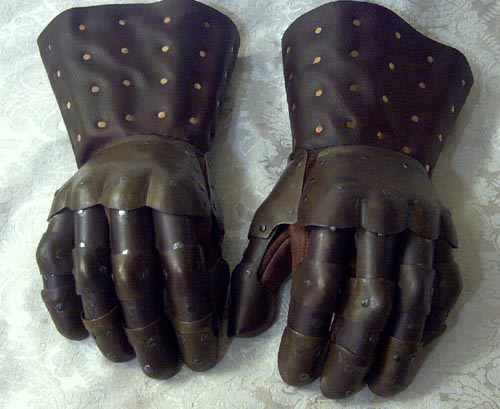
Gloves of Transposition (aka Switchgloves)

My 4e group ran into the common problem of actually having to end a session in the middle of a dungeon. Also I would not be present at the next session, and someone else was actually going to start playing with us and we needed a way to bring in the a DM PC that we have been using to fill out the party (don't worry, he is not an uberlevel locomotive). We needed an in game way to make this work and we might have to do it again. So after some thought I wrote out this magic item to help with the problem and not break the game. The gloves were made with 4e in mind but their use is so conditional that I could see them being used in games based on older rules, even stuff created by the Old School Renaissance.

Gloves of Transposition(Switchgloves) Level Any
Daily + Teleportation
These gloves look like a pair of ordinary black leather gauntlets. Each one has what looks like an obsidian jewel attached to the reverse side of the palm of the glove. Worn together the gloves are inert, they register as magical but have no ability whatsoever. The magic of the gloves only works when one glove is worn by two separate people. When worn this way the magic of the gloves enables the wearers to switch places as long as they are physically on the same plane. Each glove allows a limited telepathic link to the other user. With this link each user to do the following:
A. Open the link to the other wearer using their name.
B. Let the other user know they are ready.
C. Let the other user know they are not ready.
No other information can be sent down the link. It is not possible to don one glove and learn the name of the user with the other glove even if the other user is willing to share it.
For the magic to work several conditions must be met:
1. Each person wearing a glove must know the name of the person wearing the other glove.
2. The gloves will not allow someone to switch into immediate danger, including combat.
3. Both users must take a short rest to activate the gloves.
4. Each person wearing a glove must be willing to switch.
5. Each person wearing a glove must have communicated their readiness to switch.
When all these conditions are met a golden glow rises slowly up out of the depths of the jewel on each glove until the jewel is glowing with a very bright amber light. The users of the gloves, their clothing, equipment and everything they are touching then begin to glow until all are emmenating light, obscuring color and features. The light then begins to fade with the other user in the place of the user wearing a glove.
If the user is touching another person, then they are also transported if they are willing. Though passengers do not need to be part of the telepathic exchange that activates the gauntlets. Thus the gauntlets can switch out one for one, two for one or two for two.

Sunday, March 29, 2009

The Hexagon: The Symbol of a Renaissance

Why the Hexagon?
If there is one thing that best represents the Old School role playing movement/revolution/renaissance/zeitgeist/community/thing it would be the hexagon. D&D used hexes. So did Traveller. Role playing came out of wargaming and so it was the defacto way of representing the wilderness soldiers, explorers, and characters wandered through. All the early D&D campaigns used them: Greyhawk, The Known World, Blackmoor, and The Wilderlands to name a few. We can clearly say nothing says "Old School" like "hexagon" because "hexagon" says "war game." They work well for maps and breaking up an area to keep track of where stuff is, be it deep space or high mountains.

Where did it come from? Where did it go?
Pioneered for gaming by the RAND Corporation, the hexagon was picked up by Avalon Hill and found its way into the early days of role playing. Hexagons made gaming easier and made movement through trackless wilderness track able. My personal belief is that the removal of Demons and Devils from the game was not a reaction to the religious criticism of the era but rather an attempt to move D&D away from its wargame roots towards the storyteller railroad paradigm it had been drifting towards since the mid 80's. Get rid of Demons, Devils, Sandbox settings, "challenge the player", player-DM cooperative world development and hexagons and you could replace them with proficiencies/skills, railroading adventures, DM PCs, laundry quests imparted by Elminster, and sweet sweet pretentious drama.

What are their uses?
Hexagons are extremely useful for gaming. The right size of hex is great for judging distance. If you know the distance from face to face you can figure out the distance of each edge, the distance from the center and the distance from point to point. This allows you to figure out distance to a fairly decent ball park, especially if a DM uses a hex in hex system where hexes on one scale can be represented by hexes on another. The same system hexes in hex allows for cataloging the game world. If they are numbered a DM can keep a record of what is in each hex. This allows the DM to streamline his resources to develop only the places the players are going to go. The DM only has to provide detail when it is absolutely necessary but the players are not limited to a set path. If you use center to face and center to point you have twelve degrees of movement, not just six. Hexes help to generalize terrain. There are numerous other more subtle uses of the Hexagon.

Friday, March 20, 2009

Chim-Noamski the Talking Monkey; God of the Many Bowls

Chim-Noamski is the talking monkey god of language and civilization. Often depicted as a monkey with a bowl; he is the ultimate arbiter of the rise, fall, and direction of a civilization. His temples are covered in decorative chimpanzees with live ones everywhere. The temples are filled with nick nacks, whatever the monkeys decide to bring in. Much of the priest's time is spent cleaning up the offal created by so many animals. When they are not cleaning they are usually debating the merits of the latest divination from Chim, or acting as arbitrators in assorted disputes. Evil priests of Chim have been known to operate investment schemes which are ussually based on a false prophecy of future wealth of the community. These are known as Kanzi Schemes.

In each temple there is a large jewel eyed (typically blue jewels of value based on wealth of the community) monkey statue with a bowl. When the monkeys put something in the bowl it is interpreted as (and at times actually may be) a divination about the community (roll on divination chart). Sometimes minor prophecies concerning individuals are uttered by a random chimp in a temple (1% chance for each individual on each visit).

The Avatar of Chim (when he appears) is a blue eyed talking chimpanzee who is carrying a bowl. His bowl always contains many items. The items found in the bowl correspond to the cards in a deck of many things but the effects apply to the whole settlement where the temple is located.

Should the avatar be treated well, then he may choose to give the blessing of Chim to the settlement. Chim's blessing allows everyone who enters the settlement to be understood no matter what language they are speaking. Should the avatar be treated poorly, he may choose to give the settlement the curse of Chim. Chim's curse makes it impossible for anyone in the settlement to understand spoken language, even their own.

Knocking or breaking the bowl off the idol will incite the rage of Chim and the murderous anger of 10d6 chimpanzees and 1d6 priests of Chim.

Random Divinations of Chim-Noamski:

The divinations must be interpreted based on what was in the bowl. Before rolling on this chart the DM should create a d12 chart of random objects that the chimpanzees have collected in their temple that could turn up in the bowl, leaving the 12 blank. When a twelve is rolled on this chart it is a legitimate prophecy. The DM then should roll again to determine the item in the bowl.

The DM should then roll twice on the following chart. The first is the real meaning of the prophecy, the second is the priest's interpretation of the prophecy.


1> There will be a plague of _________ in the settlement.
2> The settlement will be destroyed by _________ in ____ days.
3> An enemy will come to destroy the settlement unless __________ is done.
4> There will be a lack of _________ in the settlement.
5> The settlement is out of the favor of Chim and must atone by ___________
6> The settlement is cursed to slowly die off and be forgotten forever.
7> The settlement is blessed and will rise to be center of an empire.
8> The settlement is in the favor of Chim and must move forward with all plans involving ________ .
9> There will be plenty of _________ in the settlement.
10> The settlement must attack all enemy settlements that have ________ and spare no one.
11> The settlement is protected from _______ for another d100 years.
12> Health and long life will come to the settlement in the form of _________.