 Back in December of 2009 (am I really that infrequent?) I posted about the 6 mile hex being the ideal hex for wilderness adventuring hex crawls over its other frequently appearing cousins the 4 and 5 mile hex. I still think that is true. But what I wanted to revisit is the third part of the post about how to break down the 6 mile hex into subhexes. In that article I was breaking everything down based on the number 12. 12 half mile subhexes and those breaking down into 12 1/24th mile subhexes. This had the cool effect of fitting in a space of 44x44 battle mat squares. But then I noticed some problems.
I was aiming to create a one page wilderness hex map that could be used no matter what subhex level you were on. When I tried to print out and use a map of a hex 12 subhexes across the hexes were too small to really draw a map in, especially when you were on a 1/2 mile scale. Sure I could use the old B/X or Mentzer wilderness symbols, but the other problem was I wanted to use hex numbers to track which subhex I was documenting and the hex numbers would not fit into the subhexes of a hex 12 accross when it was configured to fit on an 8.5 x 11 sheet of paper. Granted I could put numbers in there but they would be too small to easily read.
The change works quite well. If you have 6 one-mile subhexes across a hex you can get large enough hexes to hold hex numbers and more map detail within the hexes should you want it. One mile hexes are good also for determining how far someone can see based on the 3 miles to the horizon principle I talked about in my previous hexagon article. Each of these 1 mile hexes breaks down to 6 880ft hexes, giving a good tactical scope to the one mile hex. These 880ft hexes have some interesting stuff about them: The longer range of historical bow shot was 200 to 400 yards and the standard practice range as set down by Henry the VIII was 220yds, or 660ft. So if you are in the middle of an 880ft hex, anything else in the hex is about 150 yards away. You could even shoot well into the next hex with some accuracy. So useing this scale, a good rule of thumb is that if someone is in the same hex or the next one with you, they are within bow shot. Another benefit is that Judges Guild hex maps on the 42.24ft per subhex scale can easily be rescaled to be 35.2ft per subhex having 25 of those fit in an 880ft hex. Since the structures displayed in these maps actually would get smaller it does not stretch the imagination and may be more believable. Also, 880ft is still a number that works well with the imperial measurements of chains and furlongs and acres. Furthermore 880ft hexes divide into subhexes of ~146 feet across. That fits on a 30 x 35 battle mat.
Additionally using hexes with 6 subhexes across you can go upward too. I good area for starting a sandbox campaign would be a superhex of 6mi hexes. This is about the size of a typical county in Texas. (30mi x 30mi) Apply the same again and you might be nearing the ultimate scope of a campaign. So I have given all the different hex levels a different designation. See the measurements below for these.
So here I have up here for download my take on the one page wilderness template. I have included it in form filled PDF, lined PDF, unlined PDF, Word with lines, and Word without lines. The graphic of the large hex is about as big as I can make it on 8.5 x 11. The lines are a little funky so expect these to get cleaned up sometime soon (probably next year).
Here are the measurements of the hexes and subhexes:
HexType: Face to Face, Vertex to Vertex
Scope Hex: 216mi, 252mi
Campaign Hex: 36mi, 42mi
Adventure Hex: 6mi, 7mi
Terrain Hex: 1mi (5280ft), 1.154mi (6093.12ft)
Tactical Hex: 880ft, 1016ft
Combat Hex: ~146ft (30 squares), ~169ft (35 squares)
Judges Guild Maps: 35.2ft, ~40ft (40.3)
Remember that the center to face is half the Face to Face distance and center to vertex is half the Vertex to Vertex distance.
Here are the templates in PDF. There are three formats: blank, lined and form field:
HexMapTemplate.pdf
HexMapTemplateLines.pdf
HexMapTemplateForm.pdf
Happy wilderness mapping!
Back in December of 2009 (am I really that infrequent?) I posted about the 6 mile hex being the ideal hex for wilderness adventuring hex crawls over its other frequently appearing cousins the 4 and 5 mile hex. I still think that is true. But what I wanted to revisit is the third part of the post about how to break down the 6 mile hex into subhexes. In that article I was breaking everything down based on the number 12. 12 half mile subhexes and those breaking down into 12 1/24th mile subhexes. This had the cool effect of fitting in a space of 44x44 battle mat squares. But then I noticed some problems.
I was aiming to create a one page wilderness hex map that could be used no matter what subhex level you were on. When I tried to print out and use a map of a hex 12 subhexes across the hexes were too small to really draw a map in, especially when you were on a 1/2 mile scale. Sure I could use the old B/X or Mentzer wilderness symbols, but the other problem was I wanted to use hex numbers to track which subhex I was documenting and the hex numbers would not fit into the subhexes of a hex 12 accross when it was configured to fit on an 8.5 x 11 sheet of paper. Granted I could put numbers in there but they would be too small to easily read.
The change works quite well. If you have 6 one-mile subhexes across a hex you can get large enough hexes to hold hex numbers and more map detail within the hexes should you want it. One mile hexes are good also for determining how far someone can see based on the 3 miles to the horizon principle I talked about in my previous hexagon article. Each of these 1 mile hexes breaks down to 6 880ft hexes, giving a good tactical scope to the one mile hex. These 880ft hexes have some interesting stuff about them: The longer range of historical bow shot was 200 to 400 yards and the standard practice range as set down by Henry the VIII was 220yds, or 660ft. So if you are in the middle of an 880ft hex, anything else in the hex is about 150 yards away. You could even shoot well into the next hex with some accuracy. So useing this scale, a good rule of thumb is that if someone is in the same hex or the next one with you, they are within bow shot. Another benefit is that Judges Guild hex maps on the 42.24ft per subhex scale can easily be rescaled to be 35.2ft per subhex having 25 of those fit in an 880ft hex. Since the structures displayed in these maps actually would get smaller it does not stretch the imagination and may be more believable. Also, 880ft is still a number that works well with the imperial measurements of chains and furlongs and acres. Furthermore 880ft hexes divide into subhexes of ~146 feet across. That fits on a 30 x 35 battle mat.
Additionally using hexes with 6 subhexes across you can go upward too. I good area for starting a sandbox campaign would be a superhex of 6mi hexes. This is about the size of a typical county in Texas. (30mi x 30mi) Apply the same again and you might be nearing the ultimate scope of a campaign. So I have given all the different hex levels a different designation. See the measurements below for these.
So here I have up here for download my take on the one page wilderness template. I have included it in form filled PDF, lined PDF, unlined PDF, Word with lines, and Word without lines. The graphic of the large hex is about as big as I can make it on 8.5 x 11. The lines are a little funky so expect these to get cleaned up sometime soon (probably next year).
Here are the measurements of the hexes and subhexes:
HexType: Face to Face, Vertex to Vertex
Scope Hex: 216mi, 252mi
Campaign Hex: 36mi, 42mi
Adventure Hex: 6mi, 7mi
Terrain Hex: 1mi (5280ft), 1.154mi (6093.12ft)
Tactical Hex: 880ft, 1016ft
Combat Hex: ~146ft (30 squares), ~169ft (35 squares)
Judges Guild Maps: 35.2ft, ~40ft (40.3)
Remember that the center to face is half the Face to Face distance and center to vertex is half the Vertex to Vertex distance.
Here are the templates in PDF. There are three formats: blank, lined and form field:
HexMapTemplate.pdf
HexMapTemplateLines.pdf
HexMapTemplateForm.pdf
Happy wilderness mapping!

Showing posts with label 4e DnD. Show all posts
Showing posts with label 4e DnD. Show all posts
Wednesday, March 2, 2011
A Wilderness Template and More On Hexes
Back in December of 2009 (am I really that infrequent?) I posted about the 6 mile hex being the ideal hex for wilderness adventuring hex crawls over its other frequently appearing cousins the 4 and 5 mile hex. I still think that is true. But what I wanted to revisit is the third part of the post about how to break down the 6 mile hex into subhexes. In that article I was breaking everything down based on the number 12. 12 half mile subhexes and those breaking down into 12 1/24th mile subhexes. This had the cool effect of fitting in a space of 44x44 battle mat squares. But then I noticed some problems.
I was aiming to create a one page wilderness hex map that could be used no matter what subhex level you were on. When I tried to print out and use a map of a hex 12 subhexes across the hexes were too small to really draw a map in, especially when you were on a 1/2 mile scale. Sure I could use the old B/X or Mentzer wilderness symbols, but the other problem was I wanted to use hex numbers to track which subhex I was documenting and the hex numbers would not fit into the subhexes of a hex 12 accross when it was configured to fit on an 8.5 x 11 sheet of paper. Granted I could put numbers in there but they would be too small to easily read.
The change works quite well. If you have 6 one-mile subhexes across a hex you can get large enough hexes to hold hex numbers and more map detail within the hexes should you want it. One mile hexes are good also for determining how far someone can see based on the 3 miles to the horizon principle I talked about in my previous hexagon article. Each of these 1 mile hexes breaks down to 6 880ft hexes, giving a good tactical scope to the one mile hex. These 880ft hexes have some interesting stuff about them: The longer range of historical bow shot was 200 to 400 yards and the standard practice range as set down by Henry the VIII was 220yds, or 660ft. So if you are in the middle of an 880ft hex, anything else in the hex is about 150 yards away. You could even shoot well into the next hex with some accuracy. So useing this scale, a good rule of thumb is that if someone is in the same hex or the next one with you, they are within bow shot. Another benefit is that Judges Guild hex maps on the 42.24ft per subhex scale can easily be rescaled to be 35.2ft per subhex having 25 of those fit in an 880ft hex. Since the structures displayed in these maps actually would get smaller it does not stretch the imagination and may be more believable. Also, 880ft is still a number that works well with the imperial measurements of chains and furlongs and acres. Furthermore 880ft hexes divide into subhexes of ~146 feet across. That fits on a 30 x 35 battle mat.
Additionally using hexes with 6 subhexes across you can go upward too. I good area for starting a sandbox campaign would be a superhex of 6mi hexes. This is about the size of a typical county in Texas. (30mi x 30mi) Apply the same again and you might be nearing the ultimate scope of a campaign. So I have given all the different hex levels a different designation. See the measurements below for these.
So here I have up here for download my take on the one page wilderness template. I have included it in form filled PDF, lined PDF, unlined PDF, Word with lines, and Word without lines. The graphic of the large hex is about as big as I can make it on 8.5 x 11. The lines are a little funky so expect these to get cleaned up sometime soon (probably next year).
Here are the measurements of the hexes and subhexes:
HexType: Face to Face, Vertex to Vertex
Scope Hex: 216mi, 252mi
Campaign Hex: 36mi, 42mi
Adventure Hex: 6mi, 7mi
Terrain Hex: 1mi (5280ft), 1.154mi (6093.12ft)
Tactical Hex: 880ft, 1016ft
Combat Hex: ~146ft (30 squares), ~169ft (35 squares)
Judges Guild Maps: 35.2ft, ~40ft (40.3)
Remember that the center to face is half the Face to Face distance and center to vertex is half the Vertex to Vertex distance.
Here are the templates in PDF. There are three formats: blank, lined and form field:
HexMapTemplate.pdf
HexMapTemplateLines.pdf
HexMapTemplateForm.pdf
Happy wilderness mapping!


Monday, August 16, 2010
My Final Thoughts on 4e
It has been long enough and I have played the game enough to really talk about it now. So here are my thoughts on 4e. As if all of you asked.
I think in some way the OSR is really just a big arrow pointing to the fact that the system's inherent flaw is the system's own modularity. Though I don't think that the OSR is self aware enough to really realise it. We (the OSR) keep coming back to how rules light/simple/free form/whatever the old school games are. But we don't see why we keep coming back there. When we look at the lineage of AD&D and its successors we see something that we don't see. Our minds pick up on it but in an intuitive way rather than a frontal lobe sort of way. Like the art experts in Malcolm Gladwell's "Blink" with a glance we know something is wrong, but we can't really explain it.
4e is a marvel of mechanics in the tabletop rpg business. Each piece is simple, elegant, almost self explanatory, and modular. That is the beauty of the system. It really works well (in that all the parts work together) and lends itself to an "evergreen" marketing format. However I think the major flaw that everyone knows is there is that it is modular.
For comparison lets look at cells. These things are generally in a biological sense fairly simple. They do one job. Examined on their own they have their functions and have a purpose of working with other cells. Just a few cells working together make a simple system. This system can be documented and fairly well understood. But each time you add a cell you increase the complexity of the system until you have a very complex system like the human body. Though I would not say that 4e is as complex as the human body I think the idea here can be understood.
The more pieces you add, the slower the game must become because the system becomes more complex. The amount of information needed to play the game will easily exceed the body of knowledge known by the players. And I think this is what the OSR has discovered and not really articulated: when the amount of information exceeds the body of knowledge at the table the game will slow down because people need to look up or explain a rule or more importantly an exception to the rule. In 4e the rules at the table increase as the characters progress. This is because the abilities offer exceptions to the general body of rules and thus must be treated as rules in and of themselves.
The older format of RPGs embraced by the OSR is small and compact enough so that the information needed to play does not outstrip the body of knowledge sitting at the table. This is probably a result of necessity informing design as in its birth D&D had to be able to be sent in the mail. Now days page count is not really limited. Whereas OD&D simply had the rules of the game and spells to add complexity, 4e (along with 3e) has the rules of the game, character ability exceptions, skills, feats and spells. All of these interact together in different ways increasing complexity and outstripping player knowledge. Given that 4e has many more classes than its predecessors the explosion of rules interactions is mind boggling. This is what makes 4e so complex, slow and in the end at higher more invested levels harder to play. It is a beautiful, well made and very complex game. I think the OSR sees this and opts out to something that can carry the same story with less work.
I think in some way the OSR is really just a big arrow pointing to the fact that the system's inherent flaw is the system's own modularity. Though I don't think that the OSR is self aware enough to really realise it. We (the OSR) keep coming back to how rules light/simple/free form/whatever the old school games are. But we don't see why we keep coming back there. When we look at the lineage of AD&D and its successors we see something that we don't see. Our minds pick up on it but in an intuitive way rather than a frontal lobe sort of way. Like the art experts in Malcolm Gladwell's "Blink" with a glance we know something is wrong, but we can't really explain it.
4e is a marvel of mechanics in the tabletop rpg business. Each piece is simple, elegant, almost self explanatory, and modular. That is the beauty of the system. It really works well (in that all the parts work together) and lends itself to an "evergreen" marketing format. However I think the major flaw that everyone knows is there is that it is modular.
For comparison lets look at cells. These things are generally in a biological sense fairly simple. They do one job. Examined on their own they have their functions and have a purpose of working with other cells. Just a few cells working together make a simple system. This system can be documented and fairly well understood. But each time you add a cell you increase the complexity of the system until you have a very complex system like the human body. Though I would not say that 4e is as complex as the human body I think the idea here can be understood.
The more pieces you add, the slower the game must become because the system becomes more complex. The amount of information needed to play the game will easily exceed the body of knowledge known by the players. And I think this is what the OSR has discovered and not really articulated: when the amount of information exceeds the body of knowledge at the table the game will slow down because people need to look up or explain a rule or more importantly an exception to the rule. In 4e the rules at the table increase as the characters progress. This is because the abilities offer exceptions to the general body of rules and thus must be treated as rules in and of themselves.
The older format of RPGs embraced by the OSR is small and compact enough so that the information needed to play does not outstrip the body of knowledge sitting at the table. This is probably a result of necessity informing design as in its birth D&D had to be able to be sent in the mail. Now days page count is not really limited. Whereas OD&D simply had the rules of the game and spells to add complexity, 4e (along with 3e) has the rules of the game, character ability exceptions, skills, feats and spells. All of these interact together in different ways increasing complexity and outstripping player knowledge. Given that 4e has many more classes than its predecessors the explosion of rules interactions is mind boggling. This is what makes 4e so complex, slow and in the end at higher more invested levels harder to play. It is a beautiful, well made and very complex game. I think the OSR sees this and opts out to something that can carry the same story with less work.
Sunday, April 12, 2009
Wizards, PDFs and Piracy
 Recently WotC has announced that it was going to shut down its sales of PDFs due to piracy. I think there are two flaws in the logic they are basing their actions on.
The first it would seem is the assumption on the part of WotC is that the piracy occurs because they made the product available digitally. However my experience is that the product will become so no matter if WotC makes it digital or not. Given that I have pretty good evidence that piracy occurs way up their logistical train I think it is safe to say that PDFs or no PDFs WotC will get pirated.
I think the second flaw in the logic is that reducing piracy will increase sales. It only increases sales when the customer has a legitimate way to obtain the product in the new format. That is the problem that the recording industry faced. The record companies were so asleep at the wheel that they did not see the MP3 coming and it took them about 2 years to find out what happened to their CD sales. Essentially CDs had become obsolete and there was no way to obtain MP3s legally. Now there are outlets like i-tunes and this has given legitimate buyers a place to obtain music in the latest format. The paper world is just slower. CD to MP3 happened fast because it was digital to digital. Publishing is lagging a little because it still is largely paper to digital. Publishing has gone digital on the production side but not entirely on the distribution side. Thus it is easy for publishers to make a digital product but their logistics are such that they are still tied to paper for profit.
Though what I suspect has happened is that WotC has decided that they actually can do better at electronic sales if they are the sole source. After all they have the records of the sales and know the numbers and how much they a loosing to the middle men One Bookshelf and Paizo. Suing the people that distributed PHB II might be part of the same move for a different reason.
In conclusion I think that WotC will loose sales from this move until they have a way for people to obtain their content legitimately. Until then I suspect that electronic piracy of their products will undoubtedly increase.
Saturday, April 4, 2009
Gloves of Transposition (aka Switchgloves)
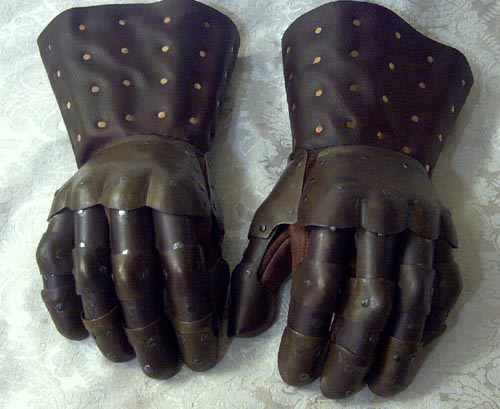 My 4e group ran into the common problem of actually having to end a session in the middle of a dungeon. Also I would not be present at the next session, and someone else was actually going to start playing with us and we needed a way to bring in the a DM PC that we have been using to fill out the party (don't worry, he is not an uberlevel locomotive). We needed an in game way to make this work and we might have to do it again. So after some thought I wrote out this magic item to help with the problem and not break the game. The gloves were made with 4e in mind but their use is so conditional that I could see them being used in games based on older rules, even stuff created by the Old School Renaissance.
Gloves of Transposition(Switchgloves) Level Any
Daily + Teleportation
These gloves look like a pair of ordinary black leather gauntlets. Each one has what looks like an obsidian jewel attached to the reverse side of the palm of the glove. Worn together the gloves are inert, they register as magical but have no ability whatsoever. The magic of the gloves only works when one glove is worn by two separate people. When worn this way the magic of the gloves enables the wearers to switch places as long as they are physically on the same plane. Each glove allows a limited telepathic link to the other user. With this link each user to do the following:
A. Open the link to the other wearer using their name.
B. Let the other user know they are ready.
C. Let the other user know they are not ready.
No other information can be sent down the link. It is not possible to don one glove and learn the name of the user with the other glove even if the other user is willing to share it.
For the magic to work several conditions must be met:
1. Each person wearing a glove must know the name of the person wearing the other glove.
2. The gloves will not allow someone to switch into immediate danger, including combat.
3. Both users must take a short rest to activate the gloves.
4. Each person wearing a glove must be willing to switch.
5. Each person wearing a glove must have communicated their readiness to switch.
When all these conditions are met a golden glow rises slowly up out of the depths of the jewel on each glove until the jewel is glowing with a very bright amber light. The users of the gloves, their clothing, equipment and everything they are touching then begin to glow until all are emmenating light, obscuring color and features. The light then begins to fade with the other user in the place of the user wearing a glove.
If the user is touching another person, then they are also transported if they are willing. Though passengers do not need to be part of the telepathic exchange that activates the gauntlets. Thus the gauntlets can switch out one for one, two for one or two for two.
Thursday, October 16, 2008
Raziel of the Sack
 Raziel of the Sack (not to be confused with Bakshi of the Bag) is the patron god of Looters, Tomb Robbers, Burglers, Highwaymen, Pirates and senseless risk takers. Raziel appears as many different types of humanoid throughout the world. His symbol is a sack. Regardless of race he is traditionally depicted carrying a one-handed axe and a sack over his shoulder. Raziel is fickle. His avatars have been known to bless adventurers with the contents of his sack or curse them by adding an item of their to the sack.
Raziel always appears as a normal male of a humanoid race with a sack and axe. He typically wears armor and a helm or hood. While he may give or take from a person, he is not above bargaining. Though his price is high and he typically asks for women (esp a bargainers full grown daughter), wine, feasts, song, and other desires reflective of his worshipers of high and luxurious value.
Interactions are always random and are a 50/50 blessing/curse. Items from the sack are randomly determined and have twice the chance of being cursed.
If using an older game use the rules for a Storm Giant's bag.
In a newer game roll randomly.
The old school applicaitons of Raziel are obvious as are his 3e/4e magic item economy applications.
(Thanks to Jeff Reints for the ispiring image)
Sunday, August 31, 2008
A couple of other design goals...
Today I made my first 4e character, based on Dirk the Daring from the DragonsLair laserdisc game:
 The thing I noticed about 4e is that while the mechanics were a lot smoother, the arrangement of the information was not helping with the process. Making the character and writing it down on a blank piece of notebook paper took an hour and a half. Now that I know the process I will beable to make a character faster.
 Yeah, me too! Characters at first level used to fit onto this. On the back of the 1981 Red Box players guide you had one of these there. It was small. You could fold it in half and it contained a whole character. You can fit your character into the first half of this (the second was all money, and gold and equipment and stuff). How cool was that!? More about the digest format later!
The thing I noticed about 4e is that while the mechanics were a lot smoother, the arrangement of the information was not helping with the process. Making the character and writing it down on a blank piece of notebook paper took an hour and a half. Now that I know the process I will beable to make a character faster.Thats all to say that while I was doing this I realised two more design goals for Codex:
- All your character information should fit on an 4.25x5.5 inch piece of paper, front sided.*
- The only changes that should be made from edition to edition of Codex are text corrections, correction to broken rules logic (ala polymorph in 3.x) and expansions worth adding.
So once we have the rules for Fighters in Codex the method to make a fighter should always be the same, unlike other RPGs where they are significantly different from edition to edition. This is to say that an edition change should not make you have to a) convert your character or b) reimagine your character. The stats with very minor tweaks should just work.
4e does rock on its own merits. One thing I really liked was that if you really wanted, you could have a fighter who is trained in Arcana. Perhaps my next character will be a ranger or fighter or paladin or warlord who hunts necromancers...
*Why such a specific size? Because I have decided that digest format rocks on toast! Everyone remember this:
 Yeah, me too! Characters at first level used to fit onto this. On the back of the 1981 Red Box players guide you had one of these there. It was small. You could fold it in half and it contained a whole character. You can fit your character into the first half of this (the second was all money, and gold and equipment and stuff). How cool was that!? More about the digest format later!
Saturday, August 30, 2008
Finally a beginning...
At least for this blog. The project covered here had its beginning in 2004-2005 with the advent of D&D 3.5's Unearthed Arcana, Castles and Crusades, and WFRP2. UA was where I started tweaking the rules of d20 and as a result came up with a some new philosophies about game design (new to me at least). C&C and WFRP2 laid the ground for some other ideas that have been gestating for the last 3-4 years and with 4e D&D they are now building themselves inside my head into a game I have decided to call Codex.
But this blog won't be just about Codex development.
Some things I plan to discuss:
But this blog won't be just about Codex development.
Some things I plan to discuss:
- Ideas about Swords and Sorcery Fiction as a genre as it relates to game design
- Problems in Gaming - specifically mechanical problems that don't seem to go away
- The Good and Bad of 4e
- Developments in the RPG Industry
- Discussions of other Systems
- "Old School" Gaming and related concepts
- Any other thing that I want to comment on which will usually be gaming related or a comment on someone else's comments
Subscribe to:
Posts (Atom)