A while ago- It must have been in the days of WFRP2 and Heroes of Horror- I found a really cool resurrection/raise dead chart that allowed for weirdness around said spells. That is it made them way more interesting. The gist was these spells could go wrong. I thought that the chart was the resurrection mishap table in Heroes of Horror, but now that I have had a good look a it I realise I must have been reading something else! One distinct feature that I remember about the chart was that it for sure had the entry where a completely different soul is returned to the new body. Another was that the guy was back yes, but he did not get to stay. Sort of a "the crow"scenario- what he is working on is important enough to allow him more life but when its done so is he.
Anyone remeber this thing?

Tuesday, March 16, 2010


Thursday, December 10, 2009
The Five Foundations of Flavor
Speculative adventure games (aka TTRPGs) are just that: games. When all of the world design, history writing, and character building is finished there are only really five different places where your players really feel and pay attention to the world you have created: the places they explore, the spells (cast on them and by them), the monsters and villians they fight, the kinds of treasure they find, and magic items they use. These are the places where a DM puts the description of the world because these are the places where the players pay attention and the rubber meets the road.
How the places they explore are presented and if they are memorable or not has a big effect on what your players will remember. The way the traps work, hazards, weirdnesses, and the general feel of the place all say something about the world you have created. How often do places like this show up? How deep do they go? How weird do they get? Who built it? Is there any indicator as to who lived and/or worked here? This is how you get the history and feel of your campaign setting in to the minds of the players.
The way magic works also says alot about the world. Do spells have the names of their creators attached to them? Are there unique spells or ways of casting spells that show something about the world? If it is rare to find magic and hard to cast spells, then it colors the world in a certain way. There may not be any good wizards in your world. How the magic works would be a great place to accentuate that. Changing how the system works just a little bit can say a lot about spells and the people who cast them.
China Mieville's Slake Moth really brings home the setting of Perdido Street Station. Your monsters and villians are the probably the most defining element of the flavor of your setting. Are monsters (and demi humans) rare? Perhaps the only real monsters in your world are men with the occasional tentacled horror, or giant snake. The presence, size, intelligence and behavior of dragons says a lot. What the characters encounter really impacts the flavor of the world probably more than anything else because these are the things they fight and most of the interaction of most games is the combat system. When you fight a monster in a location the chances are someone is going to cast a spell. You can begin to see how the colors start to come together.
Treasure. It all comes down to what a large haul is. Do you find that dragons hoarde thousands of coins or just hundreds? In some worlds 300 gold pieces is small reward. In worlds with a little different flavor 30 gold crowns sets you for life. How far does gold go? How much do you find? Is the treasure even stacks of gold or is it historical artifacts and information about the world? What you find burried may not just be wealth but flavor.
Frequency and function of magic items works hand in hand with the spells and treasure. These things are generally a way for characters to touch the history of the game world. How they work says somthing about magic and the metaphysics of the campaign. Do magic items only ever show up based on fire and ice? Is it really just misunderstood technology? What magic items you present and how many of them you present is one of the best ways of conveying the world to the players.
These are the things your players will really ever pay attention to. These are the sticky points. They will meet you at these places and these are the things that they will remember. So if you want them to remember all the work you put into writing out histories and whatnot, do it in these places. Designing spells, creating magic items, building castles that will someday make a new ruin to explore, learning secrets about monsters, and seeking wealth are the ways players connect with the world. Fostering this connection by alowing the player to get involved allows them to remember more of what you have made.
How the places they explore are presented and if they are memorable or not has a big effect on what your players will remember. The way the traps work, hazards, weirdnesses, and the general feel of the place all say something about the world you have created. How often do places like this show up? How deep do they go? How weird do they get? Who built it? Is there any indicator as to who lived and/or worked here? This is how you get the history and feel of your campaign setting in to the minds of the players.
The way magic works also says alot about the world. Do spells have the names of their creators attached to them? Are there unique spells or ways of casting spells that show something about the world? If it is rare to find magic and hard to cast spells, then it colors the world in a certain way. There may not be any good wizards in your world. How the magic works would be a great place to accentuate that. Changing how the system works just a little bit can say a lot about spells and the people who cast them.
China Mieville's Slake Moth really brings home the setting of Perdido Street Station. Your monsters and villians are the probably the most defining element of the flavor of your setting. Are monsters (and demi humans) rare? Perhaps the only real monsters in your world are men with the occasional tentacled horror, or giant snake. The presence, size, intelligence and behavior of dragons says a lot. What the characters encounter really impacts the flavor of the world probably more than anything else because these are the things they fight and most of the interaction of most games is the combat system. When you fight a monster in a location the chances are someone is going to cast a spell. You can begin to see how the colors start to come together.
Treasure. It all comes down to what a large haul is. Do you find that dragons hoarde thousands of coins or just hundreds? In some worlds 300 gold pieces is small reward. In worlds with a little different flavor 30 gold crowns sets you for life. How far does gold go? How much do you find? Is the treasure even stacks of gold or is it historical artifacts and information about the world? What you find burried may not just be wealth but flavor.
Frequency and function of magic items works hand in hand with the spells and treasure. These things are generally a way for characters to touch the history of the game world. How they work says somthing about magic and the metaphysics of the campaign. Do magic items only ever show up based on fire and ice? Is it really just misunderstood technology? What magic items you present and how many of them you present is one of the best ways of conveying the world to the players.
These are the things your players will really ever pay attention to. These are the sticky points. They will meet you at these places and these are the things that they will remember. So if you want them to remember all the work you put into writing out histories and whatnot, do it in these places. Designing spells, creating magic items, building castles that will someday make a new ruin to explore, learning secrets about monsters, and seeking wealth are the ways players connect with the world. Fostering this connection by alowing the player to get involved allows them to remember more of what you have made.
Thursday, December 3, 2009
In Praise of the 6 Mile Hex
 It is good to be back in action. I have been away on personal business, but I should be posting a little more regularly now.
So just today I stopped by Chgowiz's page and noticed that he was talking about wilderness hexes. (and it looks like Bat in the Attic has been playing with hexes a little too here and here)(and Chgowiz got Stirgessuck thinking a bit). When I left I had actually just started to kick around the old hexagon myself on this blog. And so I have some thoughts about hexagons already to go. I hope they are helpful to Chgowiz and everybody else.
As you can tell from the title, I think that the 6 mile hex is the ideal hex for wilderness adventuring hexcrawls. I used to be a big fan of the 5 mile hex as published by Judges Guild. But someone over at the Necromancer Games (was it Rob S. Conley?) pointed out back in like 2005 that it was actually a lot easier to use 6 mile hexes. And then I learned some more things about hexagons. Check it out:
1. Navigation. Estimateing a party's route through a 6 mile hex is a lot easier than any other hex. No other hex size breaks down as cleanly as a 6 mile hex. Trust me, I did the math. The numbers above are accurate to the first decimal. Thats good enough for general overland travel. Take a look at the diagram above. Its six miles from face to face. Vertex to opposite vertex is 7 miles. From the center to any face is 3 miles (half of 6). From the center to any vertex is 3.5 miles. From a navigation standpoint pretty much any route through the hex in general is covered. Enter from the vertex and leave through a face? You can approximate it pretty easily. 5 mile hexes do not lend well to this. If you wing it go with a 6 mile hex, you'll be glad you did.
2. Horizon. Your average human in a flat area without any obstructions in view (think a becalmed sea) can see up to 3 miles. Thats the distance to the horizon best case scenario. So a party travelling straight through a 6 mile hex is not going to see out of it. Unless they climb a tree or find a high place with a view. But the idea is that a 6 mile hex with varied terrain covers the distance that the party can see. A good rule of thumb is that if they take the time to survey the surrounding land then a party should be able to be aware of the terrain of the next hex over. Some pushback might come with the idea that you can see a mountain quite a ways away. But mountains are tricky in that you really can't tell how far away they are until you are a few hexes away. Getting a good vantage point (like the top of a hill or mountain) could be the opportunity for adventure in itself and being aware of the lay of the land can be its own reward. If you want to be able to tell your players how far they can see when they climb up the hill or tree or tower a good rule of thumb is that the distance to the horizon is the square root of thirteen times the height they are viewing from (http://enwikipedia.org/wiki/horizon).
3. Sub hexes. The 6 mile hex can break down into half mile sub hexes. That is 12 hexes accross. (Mr. Chgowiz, this next bit is for you) If you put a dungeon or a settlement or some other important element in a hex, it is good to know where in the hex it is. Thus it makes sense to map out the hex in subhexes. Having these is good for distant encounters, chases, and well looking for that dungeon that is supposed to be around here somewhere. But wait, theres more. Each of these hexes can break down into sub hexes that are 1/24 of a mile accross. At this point your hexes can start measureing thing like furlongs, chains and all the other medieval land measurements. Thats really convenient when you want to figure out how many hexes should a farm take up. Also, 1/24th of a mile is a distance you can put on a battlemat. 5280ft/24 = 220 ft. 220 ft/5 = 44 battlemat squares. A Chessex Mondomat covers that area. Furthermore, if you are always using hexes that have 12 subhexes accross you only have to use one type of graph paper to keep track of all the projections. That is, the graph paper that you use for your sub hexes is the same as the graph paper you use for your subhexes of subhexes.
What this all comes down to is: The one-page wilderness template just got a lot cooler.
Merry Christmas Chgowiz!
*Graphic is soley my own this time... free to use and distribute...
Friday, August 7, 2009
Abandonware Precedence
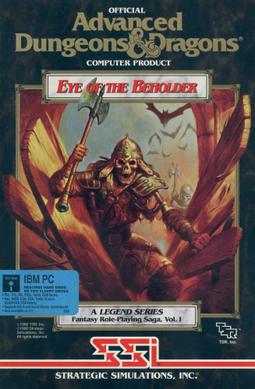
Lots of AD&D video games from the gold box era are considered abandonware. So the removal of old PDFs is not the first time that property with D&D trademarks has been abandoned. But now we enter the land of the DMCA. Don't copy that floppy! Now I want to go back to talking about hexagons.
Wednesday, April 22, 2009
Are Out of Print D&D Products Abandonware?
Over at Chgowiz's old guy RPG site he is asking if he can keep moving forward with his Ultima RPG project without EA coming down on him in a legal fashion. The interesting thing is that Ultima has been considered Abandonware for several years now. EA does not seem to kick up a fuss about games that really don't play into the profit margin, and this is pretty much the definition of Abandonware:
Abandonware refers to computer software that
is no longer sold or supported, or whose copyright ownership may
be unclear for various reasons. While the term has been applied largely to
older games, other classes of software are sometimes described as such.
So the recent actions of Wizards of the Coast creates a situation very similar to Abandonware. They are no longer supporting those games and they no longer make a profit off of them (though they easily could). Ryan Dancy (whose brand manager energy and foresight made 3.x a very successful game) makes the following point in the comments over at RPG Pundits Blog:
PDF? Causes endless problems with hardcopy partners creating pressure on
sales team they could really do without, and revenues are so small as to be
non-strategic. Cut it.
The revenues from the PDFs of old titles are probably considered non-strategic and thus we may never see them again. However, googleing D&D torrent will show that they are all over the internet, abandoned never again to make significant income for the copyright holder. Abandonware.
Sunday, April 12, 2009
Wizards, PDFs and Piracy
 Recently WotC has announced that it was going to shut down its sales of PDFs due to piracy. I think there are two flaws in the logic they are basing their actions on.
The first it would seem is the assumption on the part of WotC is that the piracy occurs because they made the product available digitally. However my experience is that the product will become so no matter if WotC makes it digital or not. Given that I have pretty good evidence that piracy occurs way up their logistical train I think it is safe to say that PDFs or no PDFs WotC will get pirated.
I think the second flaw in the logic is that reducing piracy will increase sales. It only increases sales when the customer has a legitimate way to obtain the product in the new format. That is the problem that the recording industry faced. The record companies were so asleep at the wheel that they did not see the MP3 coming and it took them about 2 years to find out what happened to their CD sales. Essentially CDs had become obsolete and there was no way to obtain MP3s legally. Now there are outlets like i-tunes and this has given legitimate buyers a place to obtain music in the latest format. The paper world is just slower. CD to MP3 happened fast because it was digital to digital. Publishing is lagging a little because it still is largely paper to digital. Publishing has gone digital on the production side but not entirely on the distribution side. Thus it is easy for publishers to make a digital product but their logistics are such that they are still tied to paper for profit.
Though what I suspect has happened is that WotC has decided that they actually can do better at electronic sales if they are the sole source. After all they have the records of the sales and know the numbers and how much they a loosing to the middle men One Bookshelf and Paizo. Suing the people that distributed PHB II might be part of the same move for a different reason.
In conclusion I think that WotC will loose sales from this move until they have a way for people to obtain their content legitimately. Until then I suspect that electronic piracy of their products will undoubtedly increase.
Saturday, April 4, 2009
Gloves of Transposition (aka Switchgloves)
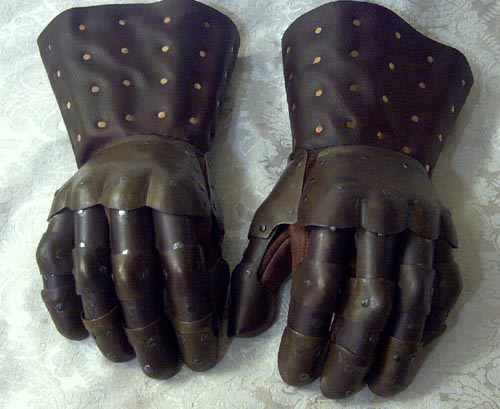 My 4e group ran into the common problem of actually having to end a session in the middle of a dungeon. Also I would not be present at the next session, and someone else was actually going to start playing with us and we needed a way to bring in the a DM PC that we have been using to fill out the party (don't worry, he is not an uberlevel locomotive). We needed an in game way to make this work and we might have to do it again. So after some thought I wrote out this magic item to help with the problem and not break the game. The gloves were made with 4e in mind but their use is so conditional that I could see them being used in games based on older rules, even stuff created by the Old School Renaissance.
Gloves of Transposition(Switchgloves) Level Any
Daily + Teleportation
These gloves look like a pair of ordinary black leather gauntlets. Each one has what looks like an obsidian jewel attached to the reverse side of the palm of the glove. Worn together the gloves are inert, they register as magical but have no ability whatsoever. The magic of the gloves only works when one glove is worn by two separate people. When worn this way the magic of the gloves enables the wearers to switch places as long as they are physically on the same plane. Each glove allows a limited telepathic link to the other user. With this link each user to do the following:
A. Open the link to the other wearer using their name.
B. Let the other user know they are ready.
C. Let the other user know they are not ready.
No other information can be sent down the link. It is not possible to don one glove and learn the name of the user with the other glove even if the other user is willing to share it.
For the magic to work several conditions must be met:
1. Each person wearing a glove must know the name of the person wearing the other glove.
2. The gloves will not allow someone to switch into immediate danger, including combat.
3. Both users must take a short rest to activate the gloves.
4. Each person wearing a glove must be willing to switch.
5. Each person wearing a glove must have communicated their readiness to switch.
When all these conditions are met a golden glow rises slowly up out of the depths of the jewel on each glove until the jewel is glowing with a very bright amber light. The users of the gloves, their clothing, equipment and everything they are touching then begin to glow until all are emmenating light, obscuring color and features. The light then begins to fade with the other user in the place of the user wearing a glove.
If the user is touching another person, then they are also transported if they are willing. Though passengers do not need to be part of the telepathic exchange that activates the gauntlets. Thus the gauntlets can switch out one for one, two for one or two for two.
Subscribe to:
Posts (Atom)